
The first time I tried to plan a trip on a real budget, I made almost every mistake you can make. I booked a flight three days before departure because I "wanted flexibility," paid for a hotel in the city center because it looked convenient on the map, and then wondered why my two-week trip drained a month's worth of savings. It took a few more trips — and a lot of trial and error — before budget travel actually started feeling easy instead of stressful.
▤ Contents⌃
- 1Budget Travel Isn't About Being Cheap — It's About Being Intentional
- 2Building a Realistic Travel Budget From Scratch
- 3Flights Are Usually Your Biggest Expense — Here's Where the Savings Actually Are
- 4Where You'll Sleep: Getting Accommodation Right
- 5Eating Well Without Blowing Your Budget
- 6Getting Around Once You've Arrived
- 7Timing Your Trip Matters More Than People Realize
- 8Common Mistakes First-Time Budget Travelers Make
- 9A Simple Planning Timeline for Your First Trip
- 10Frequently Asked Questions
- 11Your First Budget Trip Doesn't Have to Be Perfect
If you're at the point where you want to travel more but you're not sure how people actually afford it, this guide walks through everything that changed for me: how to build a realistic budget, where the big savings actually come from, and which "money-saving tips" are worth your time and which ones aren't.
Budget Travel Isn't About Being Cheap — It's About Being Intentional
There's a difference between traveling cheaply and traveling on a budget, and it matters more than it sounds. Cheap travel means cutting corners everywhere and often ending up with a miserable trip — the overnight bus that leaves you exhausted for two days, the hostel dorm room with twelve strangers when you needed sleep, the meal that made you sick.
Budget travel is different. It means deciding in advance what actually matters to you on a trip, and then being ruthless about cutting costs on everything else. Some people care about food and are happy to sleep in basic hostels. Others need a private room to function but don't care what they eat. Once you know your own priorities, budgeting stops feeling like deprivation and starts feeling like control.
This mindset shift is honestly the single biggest thing that made travel affordable for me — more than any app, hack, or discount code.
Building a Realistic Travel Budget From Scratch
Most people either overestimate how expensive travel is (and never book the trip) or underestimate it (and run out of money halfway through). The way around both problems is to break your budget into categories before you book anything.
Here's a rough breakdown of daily costs by region, based on traveling comfortably but frugally — not the absolute rock-bottom backpacker minimum, but a realistic budget most beginners can actually stick to:
| Region | Accommodation (per night) | Food (per day) | Local Transport (per day) | Rough Daily Total |
|---|---|---|---|---|
| Southeast Asia | $8–15 | $8–12 | $2–5 | $20–35 |
| Eastern Europe | $15–25 | $12–18 | $3–6 | $30–50 |
| Central America | $10–20 | $10–15 | $3–5 | $25–40 |
| Western Europe | $25–45 | $20–30 | $5–10 | $50–85 |
| South America | $10–20 | $10–15 | $3–6 | $25–40 |
These numbers move around depending on the season, the specific city versus rural areas, and how strict you're willing to be — but they're a solid starting point for a first-time budget. Once you pick a rough daily number, multiply it by the number of days you're traveling, then add flights and a buffer of about 15% for the stuff you didn't plan for (you will get sick once, you will miss a bus once, it happens to everyone).
A mistake I made early on was forgetting that arrival and departure days cost money too — airport transfers, a meal before a flight, an overpriced coffee because you're tired and don't want to think. Build a small cushion in rather than pretending those days don't exist.
Flights Are Usually Your Biggest Expense — Here's Where the Savings Actually Are
For most beginner travelers, flights eat up 30-50% of the total trip cost, which means this is where the biggest wins are. A few things genuinely move the needle here, and a few "hacks" you'll read about really don't.
What actually works:
- Flying mid-week (Tuesday or Wednesday departures) instead of Friday or Sunday
- Booking 6-10 weeks out for international flights, rather than last-minute or extremely far in advance
- Using flexible date search instead of locking in exact dates before comparing prices
- Flying into a nearby hub instead of your exact destination, then taking a cheap regional flight or bus the rest of the way
What doesn't really work (despite what you'll read): clearing your cookies before booking, or booking in "incognito mode" to avoid price tracking. Airline pricing algorithms don't actually work that way, and most price movement is just normal fluctuation you'd see anyway.
I go into a lot more detail — including how I actually search for flights step by step — in how to find cheap flights without using a travel agent, so I won't repeat the whole process here.
Where You'll Sleep: Getting Accommodation Right
This is the category where beginners either overspend the most or under-spend and regret it. A private hostel room, a budget guesthouse, or a well-reviewed hostel dorm can all work — the key is matching the type of accommodation to what you actually need on that specific trip.
A few things I've learned the hard way:
- Location matters more than star rating. A basic guesthouse a 10-minute walk from the center is almost always a better deal than a "nicer" place that costs double because it's technically closer.
- Read the recent reviews, not the overall score. A place can have a great average rating from two years ago and have gone downhill since new management took over.
- Free cancellation is worth paying slightly more for, especially early in a trip when your plans are still shifting.
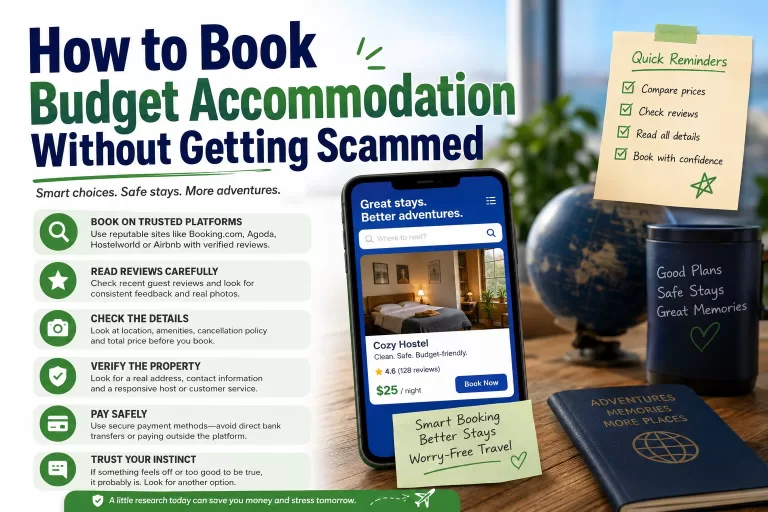
There's a full breakdown of how to book accommodation without ending up somewhere awful in how to book budget accommodation without getting scammed — it covers red flags to watch for on booking sites, which I learned about after one very unpleasant stay in Southeast Asia.
Eating Well Without Blowing Your Budget
Food is one area where budget travel and quality of life overlap the most, and it's also one of the easiest categories to control once you know a few basics.
The pattern that's worked consistently for me across dozens of countries: eat where the locals eat, not where the menu has photos and English translations. Street food stalls, local markets, and small family-run restaurants are almost always both cheaper and better than anything aimed at tourists. If a place has a laminated menu with pictures of every dish, it's usually priced for people who don't know better.
A simple rule of thumb that saves a surprising amount of money: one "real" sit-down meal a day, and cheaper options (markets, bakeries, street food, self-cooked meals if you have access to a kitchen) for the other two. This isn't about restriction — it's genuinely how a lot of the best food experiences happen anyway, since street food and markets are often where the most interesting local dishes actually are.
Getting Around Once You've Arrived
Local transport costs add up quietly, and it's one of those things beginners don't budget for properly because each individual ride feels cheap. A $2 taxi doesn't feel like much until you've taken six of them in a week.
Public transportation — buses, metros, shared vans — is almost always dramatically cheaper than taxis or ride-hailing apps, and in most cities it's also the more interesting way to travel, honestly. I put together a full comparison of the tradeoffs in public transport vs. renting a car: a budget comparison, since the right answer changes a lot depending on the destination — some places genuinely are easier and cheaper with a rental car, especially rural regions with limited public transit.
Timing Your Trip Matters More Than People Realize
Traveling during shoulder season — the weeks just before or after peak tourist season — can cut your costs by 20-40% without meaningfully changing the experience. You get milder weather than the absolute peak, smaller crowds, and noticeably lower prices on both flights and accommodation.
Peak season pricing isn't just about flights either. Accommodation prices often double, popular tours sell out or raise prices, and even restaurants in heavily touristed areas adjust their menus upward. If your travel dates have any flexibility at all, shifting by even two or three weeks outside the absolute peak can make a real difference to your total budget. There's more detail on how to actually time this in off-season travel: how to save big by timing it right.
Common Mistakes First-Time Budget Travelers Make
A few patterns show up again and again with people just getting started:
- Overpacking. Extra baggage fees and the hassle of carrying too much luggage cost more than most people expect, in both money and stress.
- Booking every night of accommodation in advance. This sounds responsible, but it removes flexibility — sometimes you'll want to stay longer somewhere, or leave a place early.
- Ignoring travel insurance to save money. This is the one place where cutting corners can turn a $50 saving into a $5,000 problem if something goes wrong.
- Not researching visa requirements early enough. Some visas take weeks to process, and finding out too late can force an expensive last-minute flight change.
- Assuming budget travel means constant discomfort. It doesn't — it means being selective about where your money goes, not avoiding spending altogether.
I cover a longer list of these, including a few that cost me real money to learn, in budget travel mistakes that cost you more money.
A Simple Planning Timeline for Your First Trip
If you're not sure where to even start, this rough timeline is close to what actually works for most first trips:
| Timeframe | What to Do |
|---|---|
| 8-10 weeks before | Pick destination, check visa requirements, start watching flight prices |
| 6-8 weeks before | Book flights, confirm passport is valid for at least 6 months past return date |
| 4-6 weeks before | Book accommodation for at least the first few nights |
| 2-3 weeks before | Buy travel insurance, sort out any vaccinations if needed |
| 1 week before | Notify your bank of travel dates, download offline maps, pack |
This isn't a strict formula — some trips come together in two weeks, others take six months of planning — but it's a useful skeleton if you've never done this before and don't know what order things should happen in.
Frequently Asked Questions
Do I need a lot of savings before I start budget traveling?
Not as much as most people think. A short trip to a genuinely affordable region can cost less than a normal month of living expenses at home. The bigger factor is usually destination choice, not the total amount saved.
Is budget travel safe compared to more expensive trips?
Safety has much more to do with preparation, awareness, and destination research than with how much money you spend. Plenty of budget travelers have safer trips than people who spend far more, simply because they've done more research beforehand.
Can I budget travel if I only have one or two weeks off work?
Yes — budget travel isn't only for long-term trips. A well-planned two-week trip to an affordable destination, booked with some flexibility on flights and accommodation, can easily fit a normal vacation schedule and a modest budget.
Your First Budget Trip Doesn't Have to Be Perfect
Every long-term traveler you've ever read about started with a first trip where they overpaid for something, packed the wrong things, or got a little lost figuring out the local transport system. That's normal, and it's honestly part of how you get better at this. The goal with your first budget trip isn't to execute everything flawlessly — it's to get out the door, learn what actually matters to you when you travel, and use that experience to make the next trip even better and even cheaper.



Comments 0