
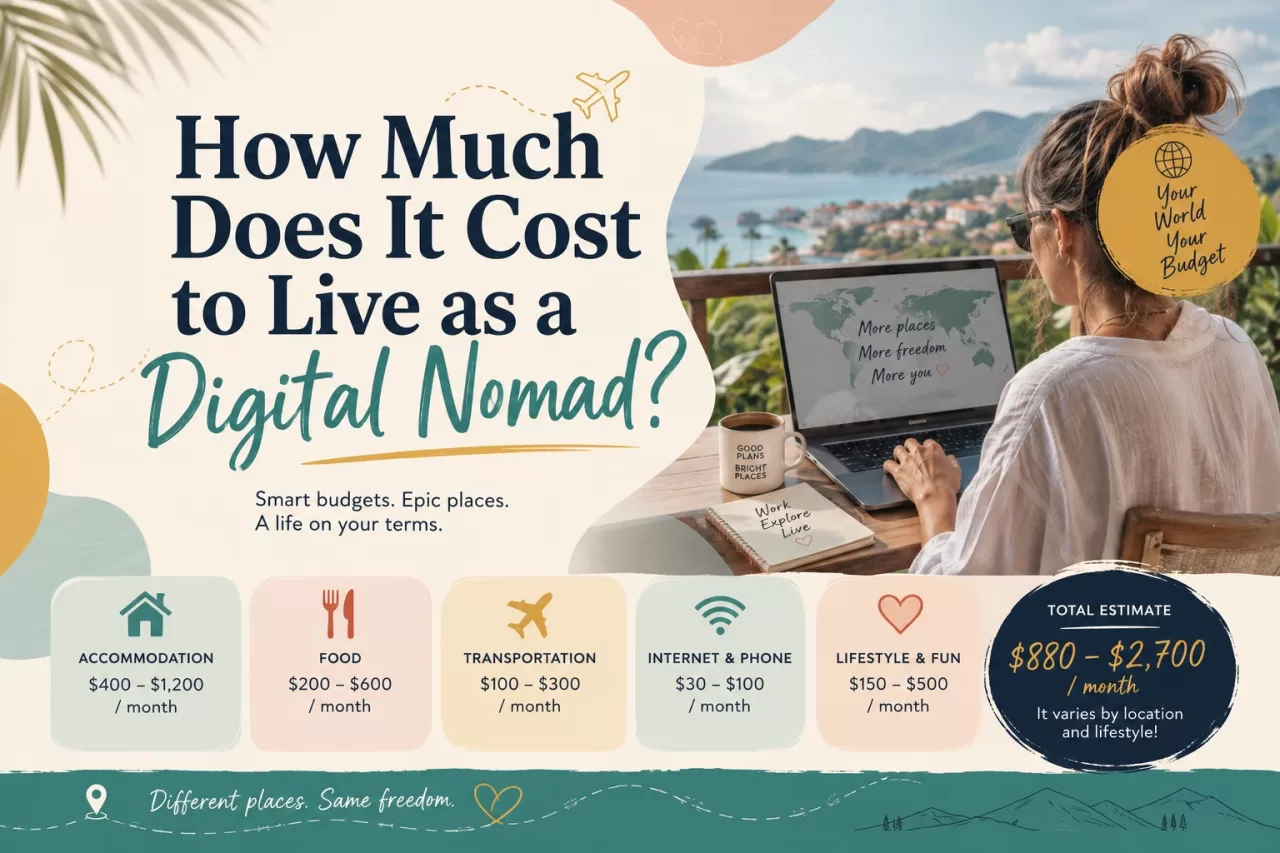
The cost of living as a digital nomad varies more by destination than almost any other factor — a comfortable monthly budget can run anywhere from around $900 in parts of Southeast Asia to $4,000 or more in Western Europe, for a broadly similar standard of living. What changes far less is the structure of the budget itself: accommodation, food, workspace, health insurance, and transport make up the bulk of it wherever you go, just at very different price points.
▤ Contents⌃
- 1What a Typical Monthly Budget Looks Like by Region
- 2Breaking Down Where the Money Actually Goes
- 3Southeast Asia: The Traditional Low-Cost Base
- 4Latin America: A Strong Middle Ground
- 5Eastern Europe: Affordable With Strong Infrastructure
- 6Western Europe: Higher Cost, Stronger Long-Term Infrastructure
- 7Hidden Costs That Rarely Make It Into Budget Estimates
- 8How Lifestyle Choices Shift the Numbers
- 9Building a Realistic Budget Before Committing to a Destination
- 10Choosing a Destination Based on Budget Level
- 11Frequently Asked Questions
- 12Matching the Budget to the Destination, Not the Other Way Around
What a Typical Monthly Budget Looks Like by Region
| Region | Comfortable Monthly Budget | Example Cities |
|---|---|---|
| Southeast Asia | $900-2,200 | Chiang Mai, Da Nang, Bali (non-touristy areas) |
| Latin America | $1,000-2,800 | Mexico City, Medellín, Oaxaca |
| Eastern Europe | $1,200-2,000 | Tbilisi, Split, Sofia |
| Western Europe | $2,000-4,500 | Lisbon, Barcelona, smaller coastal towns |
| Middle East | $2,500-5,000+ | Dubai, Abu Dhabi |
According to community-tracked data across major nomad hubs, the average comfortable monthly spend has climbed in recent years — closer to $2,200-2,300 a month across all tracked cities combined, up from under $2,000 just a couple of years earlier, largely driven by rising accommodation costs in previously cheaper hubs like Lisbon and parts of Bali.
Breaking Down Where the Money Actually Goes
Regardless of destination, a monthly nomad budget tends to break down into roughly the same categories, just at different absolute amounts:
| Category | Typical Share of Budget |
|---|---|
| Accommodation | 30-40% |
| Food | 15-25% |
| Coworking / workspace | 10-15% |
| Health insurance | $45-200/month, varies by age and coverage |
| Local transport | 5-10% |
| Miscellaneous (visas, SIMs, entertainment) | 5-10% |
Southeast Asia: The Traditional Low-Cost Base
Southeast Asia remains the region most associated with affordable digital nomad living, and for good reason — cities like Chiang Mai and Da Nang regularly come in under $1,200 a month for a comfortable setup including a private room, regular meals out, and coworking access. Bali has shifted somewhat over the past few years, with popular areas like Canggu and Ubud now costing noticeably more than they used to, though quieter parts of the island and neighboring Lombok still offer much of the original value. A full destination-specific cost breakdown for Bali specifically is in complete travel guide to Bali: costs, tips & best time to visit.
Latin America: A Strong Middle Ground
Latin America offers a wide range depending on the specific country and city. Mexico City and smaller Mexican towns like Oaxaca and Mérida can stay under $1,200 a month for a comfortable lifestyle, while Medellín and Buenos Aires sit a bit higher, generally in the $1,600-2,800 range depending on housing choices. The region's time zone alignment with US clients and employers makes it a particularly popular choice for nomads working with North American businesses.
Eastern Europe: Affordable With Strong Infrastructure
Georgia (Tbilisi in particular) and parts of the Balkans, including Croatia, offer a combination of low cost and genuinely solid infrastructure, often for less than comparable Western European cities. Georgia in particular has become known as one of the more accessible entry points for nomads on a tighter budget, helped by its visa program requiring no minimum income.
Western Europe: Higher Cost, Stronger Long-Term Infrastructure
Portugal remains one of the more affordable Western European options, though Lisbon and Porto have both seen accommodation costs rise substantially in recent years, pushing many nomads toward smaller cities and coastal towns instead. Spain and other Western European destinations tend to sit in a similar range, generally $2,000-4,500 a month depending heavily on the specific city and housing choice.
Hidden Costs That Rarely Make It Into Budget Estimates
A few recurring costs get underestimated by people building their first nomad budget:
- Visa fees and renewals, which vary widely by destination and sometimes require periodic travel to renew
- Flights when relocating, which add up quickly for nomads moving between countries every few months
- Software and subscription costs, easy to overlook but a real recurring expense for most remote work setups
- Health insurance gaps, particularly for anyone relying on standard travel insurance rather than a dedicated long-term policy
What separates adequate health coverage from coverage that leaves gaps during extended stays is covered in digital nomad health insurance: what you need to know.
How Lifestyle Choices Shift the Numbers
The same city can produce very different monthly costs depending on habits. Cooking regularly instead of eating out for most meals, sharing accommodation instead of renting a private studio, and negotiating monthly rental rates instead of paying nightly or weekly rates can all meaningfully lower costs within the same destination. On the other end, frequent socializing, premium coworking memberships, and moving between cities often (with the associated flight and short-term accommodation costs) push the budget considerably higher than the baseline estimates above.
Building a Realistic Budget Before Committing to a Destination
Rather than relying on general regional averages, a more accurate approach is checking current rent listings and cost-of-living data for the specific city being considered, since costs can vary significantly even within the same country — a smaller city or a neighborhood outside the main tourist area frequently costs 30-50% less than the most popular spot in the same country.
For anyone still working out the broader financial side of this lifestyle, including how much to save before leaving and how to avoid running out of money mid-trip, the fuller picture is covered in how to travel long-term without running out of money.
Choosing a Destination Based on Budget Level
| Monthly Budget | Realistic Destinations |
|---|---|
| Under $1,200 | Vietnam, Georgia, parts of Mexico, Philippines |
| $1,200-2,000 | Thailand, Colombia, Croatia, most of Latin America |
| $2,000-3,000 | Portugal (smaller cities), Spain, Costa Rica |
| $3,000+ | Lisbon or Barcelona city center, Dubai, most Western European capitals |
A broader, visa-focused comparison of destinations across these budget tiers is in best countries for digital nomads in 2026, and a narrower, budget-specific list of cities is in best cities for digital nomads on a budget.
Frequently Asked Questions
What's a realistic minimum monthly budget for digital nomad living?
In the most affordable destinations, a comfortable setup — private room, regular meals out, coworking access — is achievable for around $900-1,200 a month. Going below this generally requires shared accommodation and a more restrictive lifestyle.
Does the cost of being a digital nomad increase over time?
In many popular destinations, yes. Cities that were considered ultra-affordable a few years ago, including parts of Bali and Lisbon, have seen accommodation costs rise substantially as demand from remote workers has grown.
Is it cheaper to stay in one place or move between countries frequently?
Staying longer in one place is almost always cheaper, since it avoids repeated flight costs, short-term accommodation premiums, and the setup costs (SIM cards, initial deposits) that come with each move.
Matching the Budget to the Destination, Not the Other Way Around
The biggest cost mistake in this lifestyle isn't picking an expensive destination — it's picking one without checking whether it actually fits the available budget first. Regional averages are a reasonable starting point, but actual costs in a specific city, checked against current listings rather than outdated estimates, are what determine whether a destination is genuinely affordable or just has a reputation for being so.





Comments 0