
For years I planned trips the same disorganized way — book a flight because it was on sale, figure out the rest later, and then spend the week before departure frantically googling things I should have sorted out a month earlier. It usually worked out, but "worked out" often meant overpaying for last-minute accommodation or missing something I actually wanted to see because I hadn't planned enough time for it.
▤ Contents⌃
- 1Step 1: Decide on a Destination (and Be Honest About Why)
- 2Step 2: Set a Realistic Budget Before You Book Anything
- 3Step 3: Check Visa Requirements Before You Book Flights
- 4Step 4: Book Flights With a Flexible Mindset
- 5Step 5: Build a Loose Route Before Booking Accommodation
- 6Step 6: Book Accommodation With Some Flexibility Built In
- 7Step 7: Build Your Day-to-Day Itinerary — Loosely
- 8Step 8: Sort Out Travel Insurance
- 9Step 9: Gather Documents and Make Copies
- 10Step 10: Pack Based on Your Actual Itinerary, Not a Generic List
- 11A Simple Planning Timeline
- 12What If You Don't Have Months to Plan?
- 13Frequently Asked Questions
- 14Planning Gets Easier Every Time You Do It
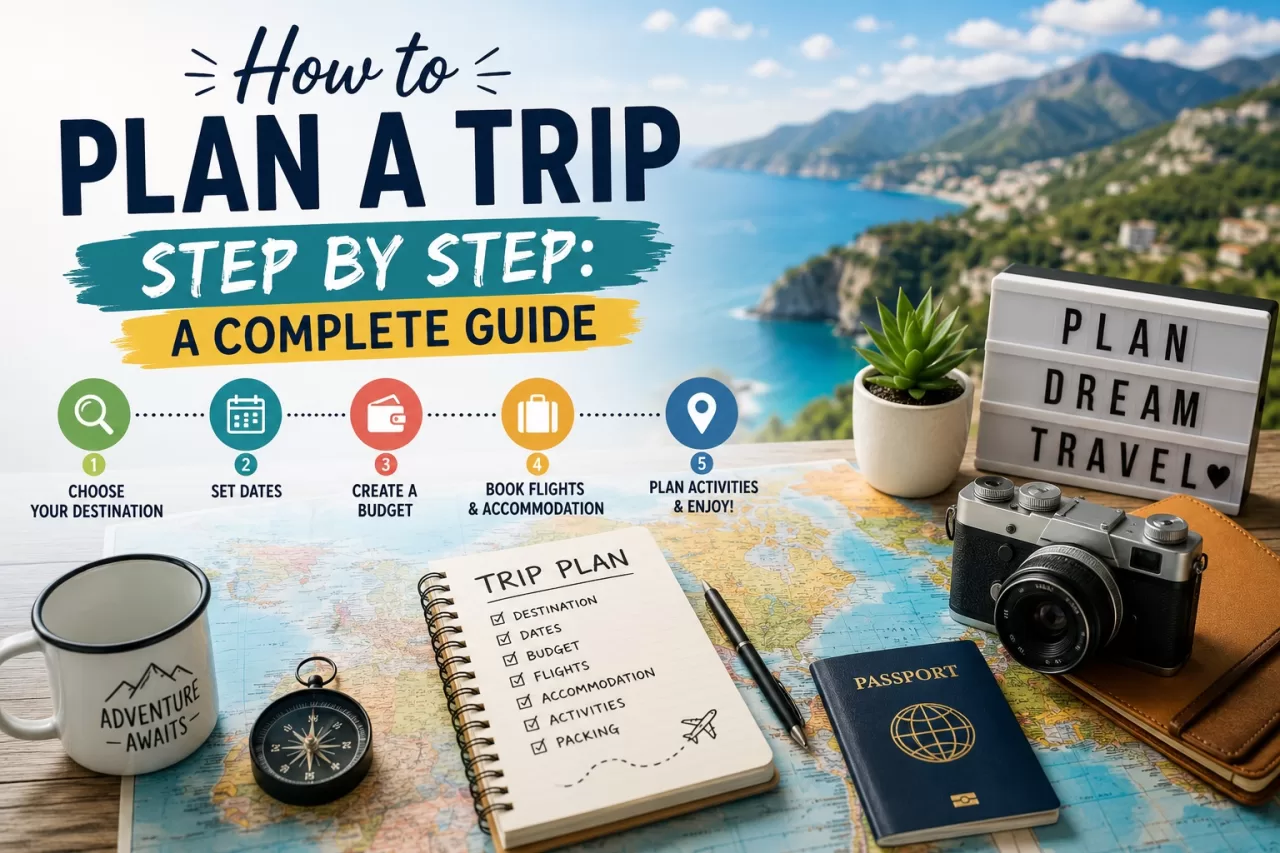
What eventually fixed this wasn't some elaborate planning system — it was just doing things in the right order. Trip planning falls apart less because people are bad planners and more because they tackle things in the wrong sequence, booking flights before they've thought about a route, or picking accommodation before checking visa requirements that end up changing the whole plan. Here's the order that actually works, step by step.
Step 1: Decide on a Destination (and Be Honest About Why)
This sounds obvious, but a lot of trip planning goes sideways because people pick a destination based on where friends went or what looked good on social media, without actually checking whether it matches what they want out of the trip. If you want to relax, a destination known for adventure activities and nightlife is going to fight you the whole way. If you want culture and history, a beach resort town isn't going to deliver much beyond the beach.
A useful filter at this stage: pick two or three things you actually want from this specific trip — rest, adventure, food, culture, nightlife, nature — and check that your destination genuinely offers those things, rather than assuming it does because it's popular.
Step 2: Set a Realistic Budget Before You Book Anything
Budgeting after you've already booked flights and accommodation is backwards, because by then the two most flexible parts of your trip are locked in. Set a rough total budget first, then work out how much you can spend on flights, accommodation, food, activities, and a buffer for the unexpected.
If you want a full breakdown of realistic daily costs by region, I've covered that in detail in how to travel on a budget: a complete beginner's guide — it's worth reading before you lock in a budget number, since costs vary a lot more by region than most people expect.
Step 3: Check Visa Requirements Before You Book Flights
This is the step people skip most often, and it's the one that causes the most expensive mistakes. Some visas take weeks to process, some require documents you don't have on hand, and a few destinations have entry requirements that can quietly change your entire itinerary — like proof of onward travel, minimum passport validity, or vaccination certificates.
Checking this before booking flights means you're not stuck rebooking (often at a higher price) if something about your entry requirements doesn't line up with your original dates. A full walkthrough of how to handle this without last-minute stress is in how to get travel visas without the hassle.
Step 4: Book Flights With a Flexible Mindset
Once your destination, budget, and visa situation are sorted, flights come next. This is usually the single biggest expense, so a bit of flexibility on exact dates can make a real difference — flying a day or two earlier or later, or into a nearby airport instead of the obvious one, often saves more than any last-minute discount code ever will.
The specific tactics that actually move the price — timing, how far in advance to book, flexible date tools — are covered step by step in best practices for booking flights at the lowest price.
Step 5: Build a Loose Route Before Booking Accommodation
Before booking a single night of accommodation, sketch out a rough route — which cities or regions you'll visit, and roughly how many nights in each. This matters because booking accommodation city by city, without a route in mind, often leads to awkward backtracking or wasted travel days later.
A simple table works well here. Something like this, for a two-week trip:
| Location | Nights | Why It's Worth the Time |
|---|---|---|
| City A (arrival point) | 2-3 | Jet lag recovery, major sights |
| Region B | 3-4 | Main reason for the trip |
| City C (departure point) | 2 | Convenient for flight home |
Even a rough version of this prevents the classic mistake of trying to cram too many stops into too little time, which usually means seeing less of everywhere and spending more on transport between places.
Step 6: Book Accommodation With Some Flexibility Built In
Once your route is roughly set, book accommodation for the first few nights firmly, and consider leaving some later nights more flexible, especially on longer trips. Plans shift once you're actually there — you might want to stay longer somewhere unexpectedly good, or leave a place early if it's not what you hoped.
Free cancellation policies are worth paying slightly more for during this stage of planning, since they let you keep this flexibility without financial risk.
Step 7: Build Your Day-to-Day Itinerary — Loosely
This is where a lot of first-time planners either do too much or too little. Planning every hour of every day leaves no room for spontaneity or for things not going exactly as planned. Planning nothing at all often means wasting time figuring things out on the ground that could have been sorted in five minutes beforehand.
The middle ground that works well: pick one or two "must-do" things per day, and leave the rest open. This gives structure without turning the trip into a checklist. A more detailed approach to building this out, including how to sequence activities by energy level and travel time, is in how to create the perfect travel itinerary.
Step 8: Sort Out Travel Insurance
This tends to get pushed to the last minute or skipped entirely, mostly because it's the least exciting part of planning a trip. But it's also the one place where cutting a small cost can turn into a very large problem — a missed flight, a medical issue abroad, or a canceled trip can cost far more than a policy ever would.
What to actually look for in a policy (rather than just picking the cheapest option) is covered in travel insurance explained: do you really need it.
Step 9: Gather Documents and Make Copies
A week or so before departure, gather everything you'll actually need — passport, visas, insurance documents, any vaccination certificates, accommodation confirmations, and flight details. Keep digital copies (a photo on your phone works, or a saved PDF) separate from the physical originals, so losing one doesn't mean losing both.
A full list of what people commonly forget here is in essential travel documents you should never forget — a surprising number of trip delays come down to something small on this list being missed.
Step 10: Pack Based on Your Actual Itinerary, Not a Generic List
Packing lists found online are a decent starting point, but the best packing list is built around your specific trip — climate, planned activities, how much laundry access you'll have, and how much you're willing to carry. Packing for a beach trip and a hiking trip are different tasks that happen to share a suitcase.
A detailed, adaptable packing approach — rather than a one-size list — is in travel packing list: what to bring for every trip.
A Simple Planning Timeline
Putting all of the above into a rough timeline, this is close to what a well-planned trip actually looks like from start to departure:
| Timeframe | What to Do |
|---|---|
| 2-3 months before | Pick destination, set budget, check visa requirements |
| 6-10 weeks before | Book flights, sketch a rough route |
| 4-6 weeks before | Book accommodation for early nights, buy travel insurance |
| 2-3 weeks before | Build a loose day-to-day itinerary, sort visas if not done already |
| 1 week before | Gather documents, start packing, notify your bank of travel dates |
What If You Don't Have Months to Plan?
This whole process can be compressed significantly if you're working with less time — a few weeks or even a few days instead of a few months. The order stays the same, but each step just happens faster and with less flexibility on things like flight prices and accommodation choice. If that's your situation, how to plan a trip on short notice covers what to prioritize and what to let go of when time is the limiting factor.
Frequently Asked Questions
How far in advance should I start planning a trip?
For international trips, 2-3 months gives enough runway for visa processing, flight deals, and accommodation availability without over-planning. Shorter trips or domestic travel can be planned in a few weeks without much downside.
Is it better to plan every detail or stay flexible?
A mix works best. Lock in the expensive, hard-to-change things early — flights, visas, first few nights of accommodation — and leave the day-to-day itinerary loose enough to adjust once you're actually there.
What's the most commonly forgotten step in trip planning?
Checking visa and entry requirements before booking flights. It's easy to assume this will be simple and leave it until the last minute, and that's exactly when it causes the most expensive problems.
Planning Gets Easier Every Time You Do It
The first trip you plan this way will probably take longer than you expect, mostly because every step is new. By the third or fourth trip, this entire process becomes almost automatic — you'll know roughly how much a destination costs before you check, you'll have a personal packing list you just reuse and adjust, and booking flights will stop feeling like a research project. Planning a trip well isn't really a talent some people have and others don't — it's just a sequence, and sequences get faster the more times you run through them.



Comments 0