

The math on full-time travel worried me long before I actually tried it. I'd done the mental spreadsheet everyone does — multiply a "normal" daily travel budget by 365 and watch the number turn into something that looked impossible on anything but a serious income. What I hadn't accounted for is that the daily cost of full-time travel isn't the same as the daily cost of a two-week vacation, not even close, once you stop moving fast and stop spending like every day is a special occasion.
▤ Contents⌃
- 1Slow Down First — It Changes Everything Else
- 2Pick Countries Where the Budget Goes Further
- 3Work Exchanges Cut the Biggest Cost Category Almost Entirely
- 4House Sitting Removes Accommodation Costs Entirely
- 5Cook More Than You Eat Out
- 6Consider Seasonal or Short-Term Work Along the Way
- 7Track Spending Weekly, Not Occasionally
- 8A Realistic Daily Budget Range
- 9Have a Real Number for How Long the Money Lasts
- 10Combine Savings With Some Form of Ongoing Income If Possible
- 11Keep Flights and Big Transitions Infrequent
- 12Frequently Asked Questions
- 13What Actually Makes This Work
Slow Down First — It Changes Everything Else
The single biggest shift that made this financially possible wasn't a clever hack, it was pace. Staying in one place for a month instead of three days changes almost every cost category at once: monthly accommodation rates are dramatically cheaper per night than nightly rates, you stop paying for constant transport between cities, and you actually get access to local grocery stores and markets instead of relying on restaurants because you don't know the area well enough to cook. Moving fast is expensive in a way that doesn't show up on any single line item — it just quietly taxes every category at once.
Pick Countries Where the Budget Goes Further
This sounds obvious written down, but it took me longer than it should have to actually act on it. Spending three months in a place where a private room costs $10 a night and a good meal costs $2 leaves an enormous amount of runway compared to spending the same three months somewhere accommodation alone runs $60 a night. This isn't about avoiding expensive places forever — it's about balancing them. A stretch of frugal countries with a very low cost of living buys room in the budget for occasional splurges elsewhere. A current list of destinations where the cost of living works especially well for this is in cheapest countries to visit in 2026.
Work Exchanges Cut the Biggest Cost Category Almost Entirely
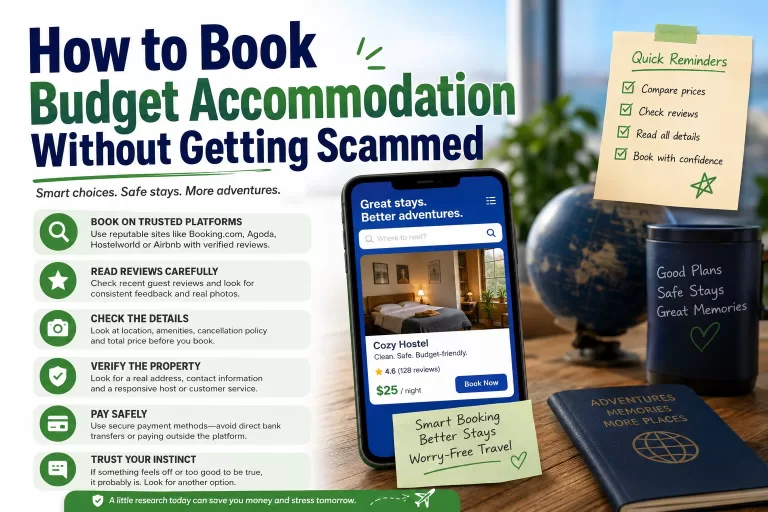
Accommodation is usually the single largest expense in any travel budget, and work exchange platforms — where a few hours of daily help at a hostel, guesthouse, or farm covers a bed and often meals — remove this cost almost entirely for as long as you're willing to stay in one place doing it. Platforms like Worldpackers and Workaway list thousands of these arrangements globally, ranging from reception work at hostels to helping out on a farm in exchange for room and board. It's not for everyone and it does mean actual work, but for someone traveling on a genuinely tight budget, it's one of the more effective tools available.
House Sitting Removes Accommodation Costs Entirely
House sitting platforms connect homeowners who need someone to look after their property (and often pets) while they're away with travelers willing to stay for free in exchange. This works particularly well for slower travel styles, since most house sitting arrangements run for a few weeks to a few months rather than a single night, and it comes with the added benefit of a real kitchen and living space rather than a shared hostel room.
Cook More Than You Eat Out
Eating out for every meal is one of the fastest ways to burn through a full-time travel budget, even in countries where restaurant food is cheap by home-country standards. Cooking regularly — which becomes much easier once you're staying somewhere for weeks at a time rather than days — cuts food costs dramatically compared to relying on restaurants for every meal, even accounting for the occasional splurge on a meal out specifically because it's worth it.
Consider Seasonal or Short-Term Work Along the Way
Some long-term travelers fund extended trips with short stretches of paid seasonal work — teaching English, seasonal hospitality jobs, ski resort work, fruit picking in countries with working holiday visa arrangements — rather than relying purely on savings or fully remote income. This requires the right visa arrangement for the destination, but it's a legitimate and fairly common way to extend a travel budget significantly beyond what savings alone would allow.
Track Spending Weekly, Not Occasionally
A pattern I noticed in myself early on: small, frequent purchases (a taxi here, a slightly nicer meal there) added up far faster than any single big expense did. Checking spending against a weekly number, rather than only reviewing things monthly or whenever a bank balance looked concerning, catches this kind of gradual overspending early enough to actually adjust before it becomes a real problem.
A Realistic Daily Budget Range
| Travel Style | Daily Budget |
|---|---|
| Extremely frugal (work exchanges, house sitting, cheapest regions) | $10-20 |
| Comfortable but tight budget, slow travel | $25-40 |
| Moderate budget with occasional splurges | $40-60 |
These numbers shift considerably by region, and a fuller regional cost breakdown is worth reviewing before setting expectations for any specific route, covered in how to travel on a budget: a complete beginner's guide.
Have a Real Number for How Long the Money Lasts
Sitting down and actually calculating (rather than roughly guessing) how many months a specific savings amount realistically covers, at a specific daily spending rate, removes a lot of the background anxiety that comes with open-ended travel. It also makes it much easier to notice early if spending is drifting above what the plan can sustain, rather than finding out abruptly when the number gets uncomfortably low.
Combine Savings With Some Form of Ongoing Income If Possible
Pure savings-funded travel has a built-in end date, which works fine for some trips but adds pressure that a bit of ongoing income — even modest freelance work, seasonal jobs, or a small remote income stream — can relieve considerably. This doesn't need to fully fund the trip; even covering a portion of ongoing costs meaningfully extends how long a given amount of savings will last. The broader financial strategies for sustaining this over the long term are covered in how to travel long-term without running out of money.
Keep Flights and Big Transitions Infrequent
Every flight and every move to a new country carries costs beyond the ticket price itself — visa fees, new SIM cards, the general inefficiency of arriving somewhere unfamiliar. Spacing these out as much as the trip allows, rather than hopping between countries every couple of weeks, keeps a much larger share of the budget going toward actual living costs instead of the friction of constant transitions. Specific strategies for keeping flight costs down on the moves that are necessary are covered in how to find cheap flights without using a travel agent.
Frequently Asked Questions
How much money do you actually need saved to travel full-time on a tight budget?
It depends heavily on destination choice and pace, but a savings buffer combined with slow travel through affordable regions can stretch dramatically further than most people initially assume — often lasting a year or more on an amount that would only cover a few months of fast-paced, expensive-region travel.
Are work exchanges and house sitting actually reliable ways to cut costs?
Yes, for travelers willing to commit real time and effort to them. They're not a fit for a fast-moving trip, but for slower, long-term travel they meaningfully reduce the single biggest expense category most travelers face.
Is it possible to travel full-time without any income at all?
Only for as long as savings last, which sets a hard end date on the trip. Even modest ongoing income, through freelance work, seasonal jobs, or work exchanges, extends this considerably and removes the fixed countdown.
What Actually Makes This Work
None of this comes down to a single trick — it's the combination of slower travel, cheaper regions, reduced accommodation costs through work exchanges or house sitting, and genuinely tracking spending rather than guessing. Full-time travel on a tight budget isn't really about eliminating every comfort; it's about being deliberate with where the money goes so it lasts as long as the trip actually needs it to.



Comments 0