
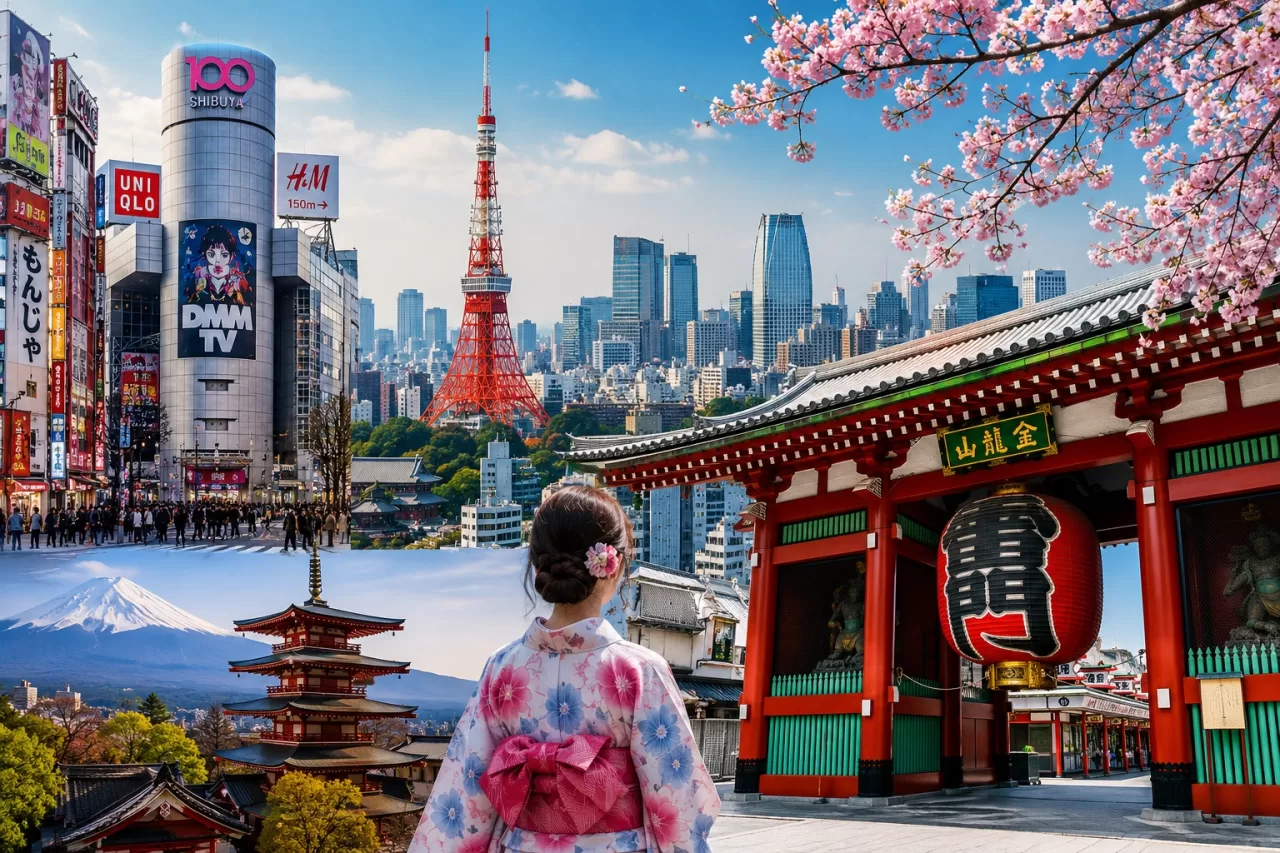
Tokyo doesn't have a single center the way some cities do — it's more like a cluster of distinct districts, each with its own pace and personality, loosely connected by one of the most efficient train systems in the world. First-time visitors often try to see everything in a few days and end up spending more time in transit than actually experiencing anywhere. A better approach is picking a handful of neighborhoods and giving each one enough time to actually feel it, rather than rushing through a checklist.
▤ Contents⌃
- 1Getting Oriented: Tokyo's Key Districts
- 2Senso-ji Temple, Asakusa
- 3Shibuya Crossing and Shibuya Sky
- 4teamLab Planets or teamLab Borderless
- 5Meiji Shrine and Yoyogi Park
- 6Tsukiji Outer Market
- 7Akihabara for Electronics and Pop Culture
- 8Shinjuku Golden Gai and Omoide Yokocho
- 9A Day Trip: Mount Fuji or Nikko
- 10Getting Around: The Practical Side
- 11When to Visit
- 12A Sample First-Time Itinerary
- 13Food Worth Prioritizing
- 14Practical Notes Before You Go
- 15Frequently Asked Questions
- 16Making the Most of a First Visit
This guide covers the places worth prioritizing on a first visit, along with the practical details — transport, timing, food — that make the trip run smoothly.
Getting Oriented: Tokyo's Key Districts
| District | What It's Known For |
|---|---|
| Shibuya | The famous crossing, nightlife, youth fashion culture |
| Shinjuku | Skyscrapers, entertainment district, one of the busiest train stations in the world |
| Asakusa | Traditional Tokyo, temples, older architecture |
| Harajuku & Omotesando | Fashion, street style, upscale shopping alongside quirky boutiques |
| Akihabara | Electronics, anime and gaming culture |
| Ginza | Upscale shopping and dining, more polished and formal |
Senso-ji Temple, Asakusa
Tokyo's oldest temple sits at the end of Nakamise-dori, a shopping street lined with stalls selling traditional snacks and souvenirs. Arriving early in the morning, before the tour groups arrive, makes a noticeable difference — the temple grounds are far quieter, and the surrounding streets haven't filled up yet. The neighborhood around Senso-ji also gives a sense of an older, more traditional Tokyo that contrasts sharply with the districts covered later in this list.
Shibuya Crossing and Shibuya Sky
The crossing itself takes about thirty seconds to walk and doesn't need much explanation once you've seen it — hundreds of people moving in every direction at once, multiple times a minute. What's worth planning for is seeing it from above. Shibuya Sky, an observation deck on top of the Shibuya Scramble Square building, offers a clear view of the crossing along with the rest of the city skyline, and it's considerably less crowded than the ground-level viewing spots most photos are taken from.
teamLab Planets or teamLab Borderless
Tokyo's immersive digital art museums have become one of the most consistently recommended experiences in the city, and they earn the reputation. These aren't traditional museums with static exhibits — rooms respond to movement, water, and light in ways that are difficult to describe accurately without seeing them. Tickets sell out well in advance, particularly for weekend visits, so booking as soon as travel dates are confirmed is worth doing rather than waiting until arrival.
Meiji Shrine and Yoyogi Park
A short walk from the busy streets of Harajuku, Meiji Shrine sits inside a forested park that feels disconnected from the city around it almost immediately after entering. It's one of the more effective contrasts in Tokyo — the transition from Harajuku's crowded fashion streets to the quiet of the shrine grounds happens within a few minutes of walking. Yoyogi Park, adjacent to the shrine, is worth a slower walk on weekends, when local performers, musicians, and small gatherings tend to fill the paths.
Tsukiji Outer Market
While the main fish auction moved to Toyosu Market years ago, the outer market at Tsukiji remains active and is a better fit for a casual visit — narrow streets packed with food stalls selling fresh sushi, grilled seafood, and Japanese street food, with far more accessible prices than a formal restaurant. Going early in the morning, ideally before 9am, means fresher food and considerably smaller crowds than a midday visit.
Akihabara for Electronics and Pop Culture
Akihabara's reputation as an electronics district has expanded into a broader hub for anime, gaming, and pop culture, with multi-story stores dedicated to everything from vintage game consoles to collectible figures. It's a district that rewards wandering rather than a fixed plan — some of the more interesting finds are in smaller stores tucked into side streets rather than the main shopping strip.
Shinjuku Golden Gai and Omoide Yokocho
These two areas are clusters of tiny bars and eateries, many seating only a handful of people at a time, packed into narrow alleyways near Shinjuku Station. Golden Gai leans more toward small, quirky bars with distinct themes, while Omoide Yokocho (sometimes called "Piss Alley," an older nickname that's stuck around) is known for yakitori skewers grilled right in front of you. Both areas get busy in the evening and are worth visiting specifically at night rather than during the day, when most of the bars aren't open yet.
A Day Trip: Mount Fuji or Nikko
For a first visit long enough to include a day trip outside the city, Mount Fuji (via the Kawaguchiko area) and Nikko are the two most commonly recommended options. Kawaguchiko offers lake views with Fuji as a backdrop, weather permitting, while Nikko is known for its elaborately decorated shrines and surrounding forest trails. Both are reachable by train in roughly two hours from central Tokyo, making either workable as a single day trip without an overnight stay.
Getting Around: The Practical Side
Tokyo's train and subway network is extensive but genuinely navigable once a few basics are understood. A prepaid IC card (Suica or Pasmo) works across nearly all trains, subways, and buses in the city, and can be loaded and reloaded at station machines without needing to buy individual tickets each time.
Google Maps handles Tokyo's transit system reliably, including which platform and train car to use for the fastest transfers — a detail that matters more here than in most cities, given how large some stations are. Having offline access to maps and a working data connection makes navigating considerably smoother, and options for staying connected are covered in best ways to stay connected to WiFi while traveling.
When to Visit
Tokyo has distinct seasons, and each one changes the experience noticeably. Spring (late March through early April) brings cherry blossom season, one of the most popular times to visit and correspondingly one of the more crowded and expensive. Autumn (October to November) offers comparable weather with noticeably smaller crowds. Summer is hot and humid, and winter, while cold, tends to have clear skies and lower prices on accommodation.
For anyone specifically planning around cherry blossoms, timing matters significantly from year to year, and the details are covered in best time to visit Japan for cherry blossoms.
A Sample First-Time Itinerary
| Day | Focus |
|---|---|
| 1 | Asakusa (Senso-ji), Ueno Park area |
| 2 | Shibuya (crossing, Shibuya Sky), Harajuku, Meiji Shrine |
| 3 | Shinjuku by day, Golden Gai or Omoide Yokocho at night |
| 4 | Tsukiji Outer Market, teamLab, Akihabara |
| 5 | Day trip to Mount Fuji area or Nikko |
This isn't the only reasonable order, but it groups nearby districts together to cut down on unnecessary train transfers, which matters more in a city this large than it might seem from a map.
Food Worth Prioritizing
Beyond the well-known sushi and ramen, a few things worth specifically seeking out on a first visit: conveyor belt sushi (kaiten-zushi) for an affordable and genuinely good introduction to sushi, izakaya-style small plates for a more social dining format, and department store basement food halls (depachika), which offer an enormous range of high-quality prepared food at a fraction of restaurant prices.
Practical Notes Before You Go
- Cash still matters, particularly at smaller restaurants, temples, and some transit situations, despite Tokyo's reputation for being tech-forward.
- Convenience stores (konbini) are far more useful than their name suggests — reliable food, ATMs that accept foreign cards, and even bill payment services.
- Tipping isn't expected and can occasionally cause confusion if attempted at restaurants.
- Trains stop running around midnight, so late nights out require either planning around the last train or budgeting for a taxi back.
Frequently Asked Questions
How many days do you need for a first visit to Tokyo?
Four to five days covers the major districts without excessive rushing. A shorter visit is workable but usually means picking two or three areas rather than attempting the full list above.
Is Tokyo expensive to visit?
Accommodation and dining can range widely, from budget hostels and conveyor belt sushi to high-end hotels and formal dining. Day-to-day costs like transport and casual meals are generally reasonable compared to other major global cities.
Do you need to speak Japanese to get around?
Not for a typical first visit. Signage in major stations and tourist areas is usually bilingual, and translation apps handle most situations that come up. A handful of basic phrases still help, particularly outside the most touristed areas.
Making the Most of a First Visit
Tokyo rewards a loosely structured plan more than a tightly scheduled one — grouping nearby districts by day, leaving room to wander through smaller streets between the main stops, and accepting that no first visit covers everything the city has to offer. The places listed here give a solid, well-rounded introduction, but they're a starting point rather than a complete list, and most first-time visitors end up planning a return trip before the first one is even over.



Comments 0