
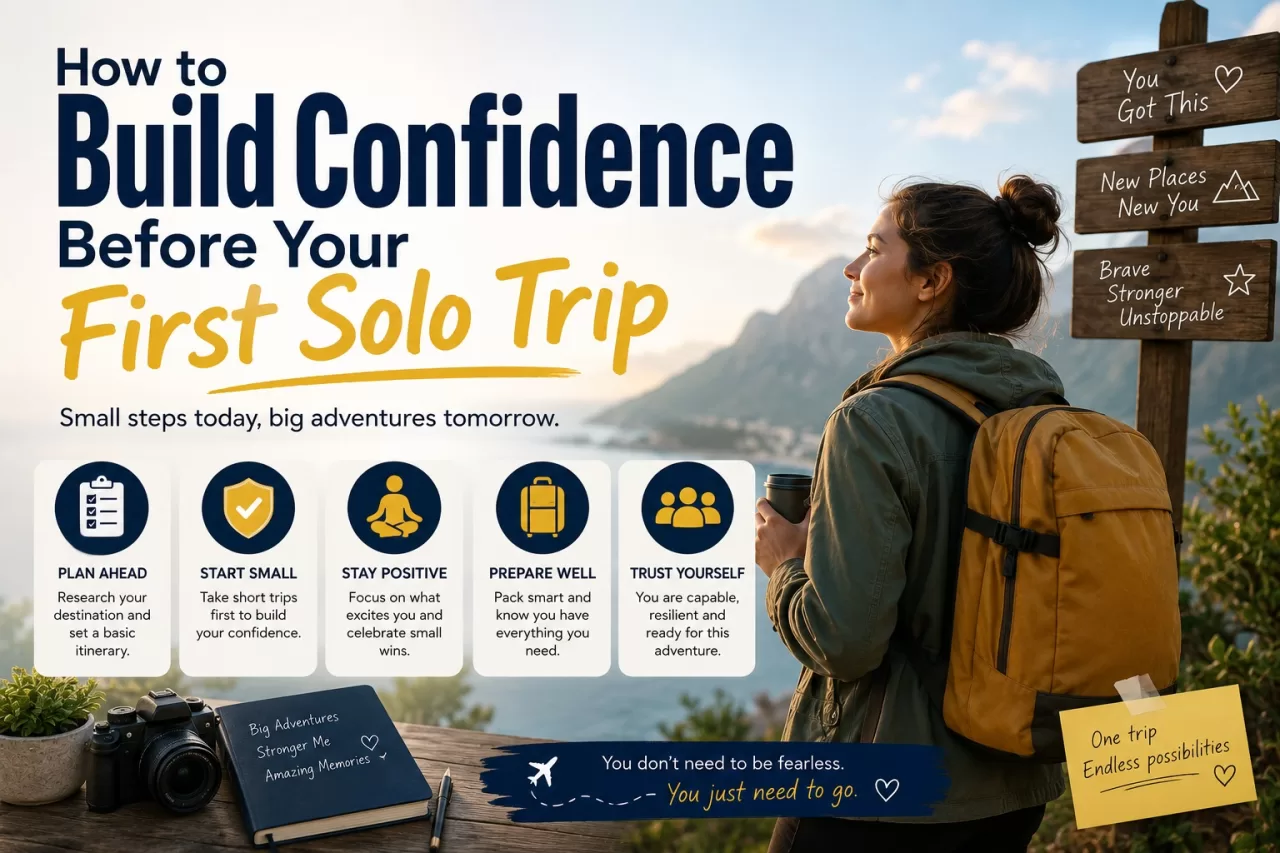
Confidence before a first solo trip usually comes from preparation, not personality. People who feel ready for solo travel aren't necessarily less anxious by nature — they've generally just removed more of the unknowns in advance, which is what most pre-trip nervousness is actually about. The steps below focus on the specific things that make the biggest difference before departure.
▤ Contents⌃
- 1Start With a Beginner-Friendly Destination
- 2Over-Research the First 24 Hours
- 3Practice the Logistics at Home First
- 4Book the First Few Nights Somewhere Social
- 5Join One Organized Activity Early
- 6Build a Financial Buffer Specifically for Peace of Mind
- 7Have a Communication Plan With Someone at Home
- 8Reframe Discomfort as Normal, Not a Warning Sign
- 9Have a Loose Itinerary, Not a Rigid One
- 10Consider a Shorter Trip First
- 11Quick Reference: Where Confidence Actually Comes From
- 12If Fear Persists Once the Trip Begins
- 13Frequently Asked Questions
- 14Confidence Builds Through the Trip, Not Just Before It
Start With a Beginner-Friendly Destination
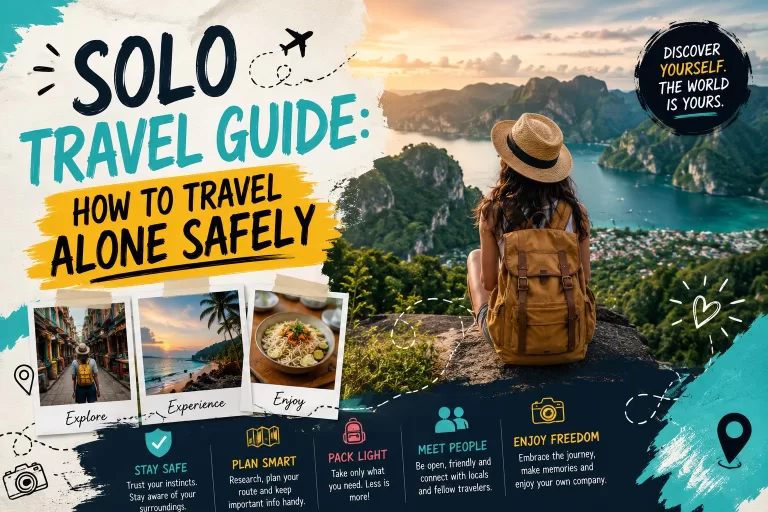
The destination itself has more influence on first-trip confidence than most people expect. A place with reliable infrastructure, a low language barrier, and an established solo-travel scene removes a large share of the unknowns that cause pre-trip anxiety. Attempting a logistically complex or remote destination as a first solo trip adds difficulty on top of the general challenge of traveling alone for the first time, which isn't necessary early on. A list of destinations that consistently work well for this is in best destinations for solo female travelers, and the general safety fundamentals that apply everywhere are covered in solo travel guide: how to travel alone safely.
Over-Research the First 24 Hours
The first day of any solo trip tends to generate the most anxiety, since everything is unfamiliar at once — the airport, the transport into the city, checking into accommodation, finding food. Researching this specific window in detail (how to get from the airport to accommodation, what the check-in process looks like, where to get cash or a SIM card) removes most of the uncertainty that makes the first day feel overwhelming. Once that initial window is handled, the rest of the trip tends to feel considerably more manageable by comparison.
Practice the Logistics at Home First
A surprising amount of first-trip anxiety comes from unfamiliarity with basic travel logistics rather than the destination itself — reading a boarding pass, navigating an unfamiliar airport, using public transit apps. Practicing these at home, even in a low-stakes way (taking public transit to an unfamiliar part of a home city, for instance), builds a kind of general travel competence that carries over directly to a first solo trip.
Book the First Few Nights Somewhere Social
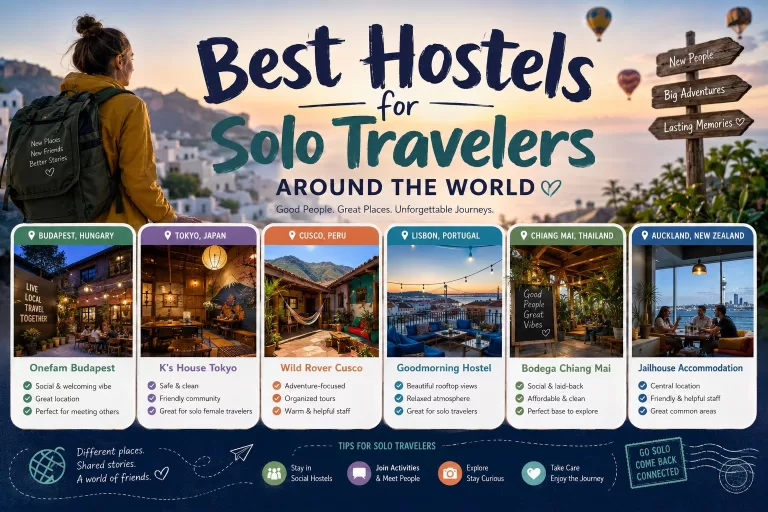
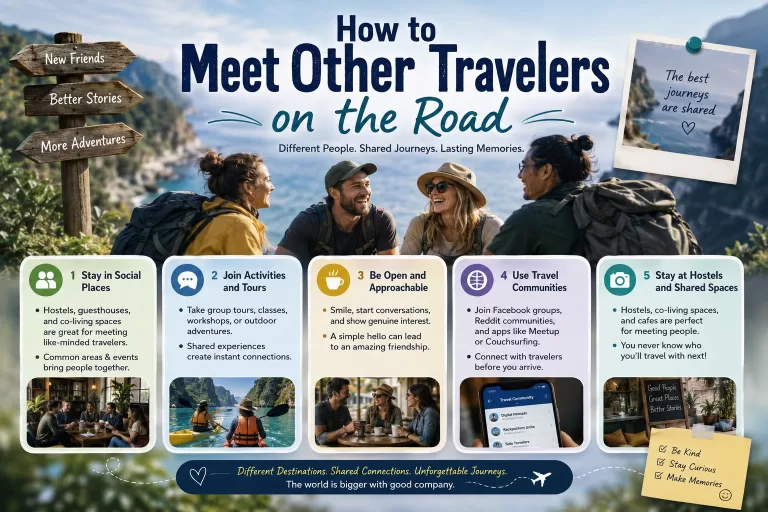
Choosing a social hostel or a guesthouse known for a friendly, communal atmosphere for the first few nights gives an early, low-pressure way to meet other travelers, which reduces the isolation that sometimes drives first-trip nervousness. It's much easier to build confidence once there's already a small support network of other travelers in the same place. Specific strategies for this are covered in how to meet other travelers on the road.
Join One Organized Activity Early
A group day tour, a walking tour, or a cooking class within the first day or two of arrival provides structure at exactly the point in a trip when structure is most reassuring. It also tends to be a natural way to meet other travelers without needing to actively seek out conversation, which can feel like an extra hurdle on top of navigating a new place alone.
Build a Financial Buffer Specifically for Peace of Mind
Beyond the standard trip budget, having a small additional buffer set aside specifically for unexpected situations — a missed connection, an unplanned taxi, an emergency accommodation change — removes a layer of stress that would otherwise compound with general first-trip nervousness. Knowing this buffer exists, even if it's never used, tends to reduce anxiety around money-related decisions made in the moment.
Have a Communication Plan With Someone at Home
Agreeing on a simple check-in routine with a friend or family member — a message at the end of each day, for instance — provides a structure that helps manage anxiety on both sides, without requiring constant contact. Knowing that someone expects to hear from you regularly, and that they'd notice if you didn't check in, is reassuring precisely because it's rarely needed in practice.
Reframe Discomfort as Normal, Not a Warning Sign
Some nervousness in the days leading up to a first solo trip is typical and doesn't necessarily indicate the trip is a bad idea. Distinguishing between general pre-trip nerves (common, usually fades once the trip starts) and a genuine, specific concern about safety or logistics (worth addressing directly) helps avoid either ignoring a real issue or over-interpreting normal anticipation as a red flag.
Have a Loose Itinerary, Not a Rigid One
A loosely planned first day or two — knowing roughly what to do without every hour scheduled — tends to reduce anxiety more effectively than either extreme. A completely unplanned first day can feel overwhelming without any structure to fall back on, while an overly rigid schedule removes the flexibility to adjust if something takes longer than expected or a genuine interest comes up unexpectedly.
Consider a Shorter Trip First
A shorter first solo trip — a long weekend or a week rather than a month — lowers the stakes considerably while still building the same core skills and confidence needed for longer solo travel later. Many people who eventually travel solo for extended periods started with a much shorter trip specifically to test the experience before committing to something longer.
Quick Reference: Where Confidence Actually Comes From
| Source of Confidence | What It Addresses |
|---|---|
| Choosing a beginner-friendly destination | Reduces overall logistical and cultural unknowns |
| Researching the first 24 hours in detail | Removes the most anxiety-inducing window of the trip |
| Booking social accommodation first | Reduces isolation, builds an early support network |
| Financial buffer | Reduces stress around unexpected costs or changes |
| Check-in plan with someone at home | Provides a safety net without requiring constant contact |
If Fear Persists Once the Trip Begins
Preparation reduces anxiety before departure, but some nervousness in the first day or two of an actual trip is still common even with good preparation. Specific strategies for managing this once it comes up in the moment — rather than before the trip — are covered in how to overcome fear when traveling alone.
For travelers who find open, high-stimulation social settings draining rather than confidence-building, a different approach tends to work better and is covered in solo travel tips for introverts. And for anyone still deciding whether solo travel is the right approach for a specific trip at all, solo travel vs. group travel: which is right for you covers when each option tends to make more sense.
Frequently Asked Questions
Is it normal to feel nervous before a first solo trip?
Yes, and it's one of the most commonly reported feelings among first-time solo travelers, regardless of overall personality or how much research has gone into the trip. It typically fades significantly within the first day or two of actually traveling.
Does confidence come before or after the first solo trip?
Mostly after, though preparation before departure builds a meaningful head start. Most people report that actual confidence solidifies during the trip itself, once early logistics are successfully handled and the unknowns become familiar.
Should someone wait until they feel fully confident before attempting solo travel?
Not necessarily. Waiting for complete confidence before a first attempt often means waiting indefinitely, since confidence in this specific area tends to build through direct experience rather than through preparation alone.
Confidence Builds Through the Trip, Not Just Before It
Preparation matters, but it's worth setting realistic expectations about what it can actually do — it reduces unknowns and removes avoidable stress, but full confidence in solo travel typically comes from the experience itself rather than anything done beforehand. The goal of preparation isn't to eliminate all nervousness before departure; it's to make the first trip manageable enough that the experience itself can do the rest.

Comments 0