
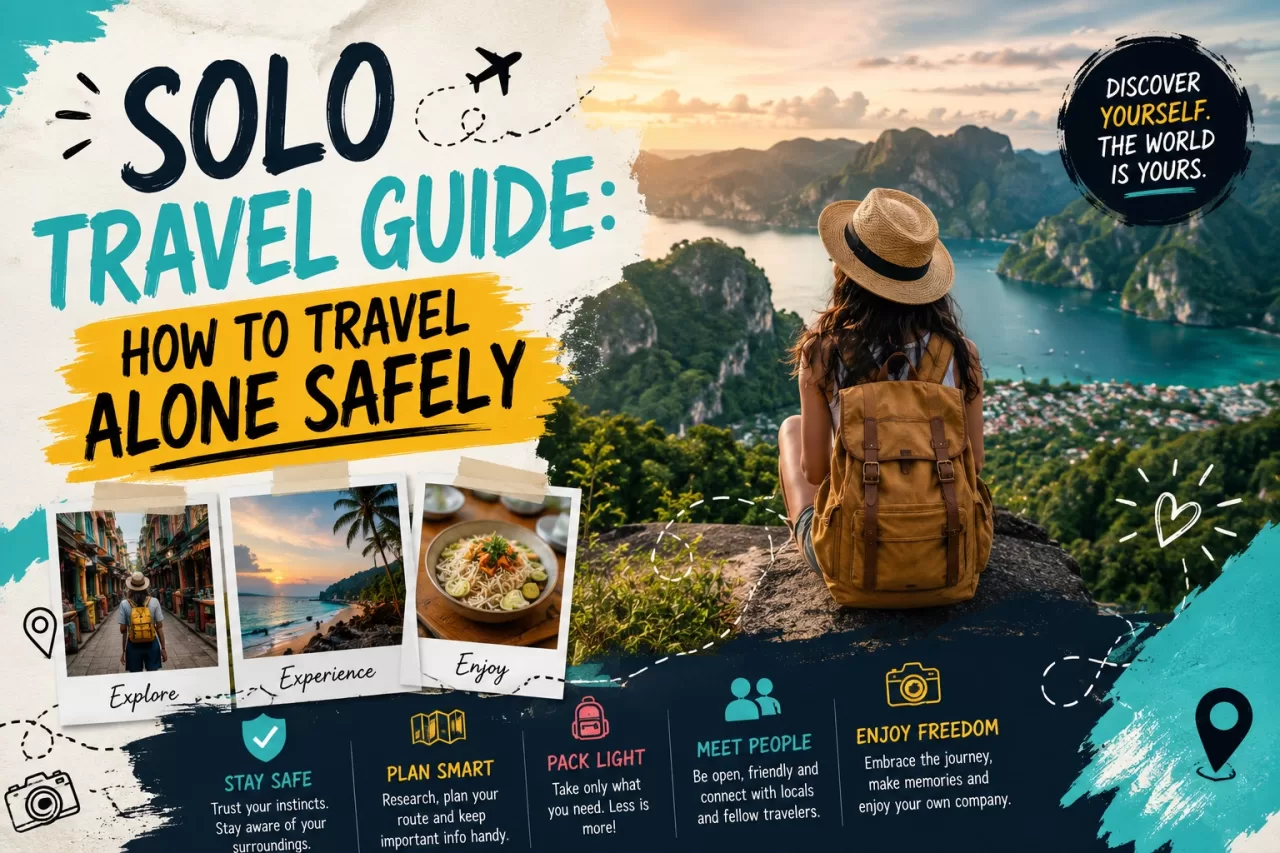
Traveling alone comes with a specific set of safety questions that group travel doesn't raise in the same way — there's no one to watch your bag while you use the bathroom, no one to notice if you don't come back from a night out, and no one splitting the mental load of staying alert in an unfamiliar place. None of this means solo travel is inherently dangerous. It means the precautions look a little different, and knowing what actually reduces risk (versus what just feels reassuring) makes a real difference.
▤ Contents⌃
- 1Before You Go: Preparation That Actually Matters
- 2Research the Destination Beyond the Highlights
- 3Share Your Itinerary With Someone at Home
- 4Get Travel Insurance That Covers Solo Situations
- 5Keep Copies of Important Documents
- 6Choosing Where to Stay
- 7Staying Safe Day to Day
- 8Nighttime Safety Specifically
- 9Useful Tools and Apps
- 10Money and Budget Considerations
- 11Solo Travel for Women
- 12Is Solo Travel Right for This Trip, or Would Group Travel Be Safer?
- 13Common Solo Travel Safety Mistakes
- 14Frequently Asked Questions
- 15The Practical Version of Solo Travel Safety
This guide covers the practical side of staying safe as a solo traveler — before you go, once you land, and in the specific situations where risk tends to be highest.
Before You Go: Preparation That Actually Matters
Most solo travel safety starts long before departure. A few steps here reduce far more risk than any gadget or app bought at the airport.
Research the Destination Beyond the Highlights
Generic "top things to do" content rarely covers safety specifics. Look for information on which neighborhoods are considered less safe at night, common scams targeting tourists in that specific city, and any areas or situations locals specifically advise against. Government travel advisory websites (most countries publish these for their citizens traveling abroad) are a reliable, non-sensationalized source for this.
Share Your Itinerary With Someone at Home
A simple, low-effort habit: send a rough itinerary — where you're staying, when you're moving to the next location — to a friend or family member before you leave, and update it if plans change significantly. This isn't about needing rescue; it's about someone knowing where to start looking if something ever did go wrong.
Get Travel Insurance That Covers Solo Situations
Solo travelers should pay particular attention to medical evacuation coverage and 24/7 emergency assistance lines, since there's no travel companion to help coordinate care or communication if something happens. What to check for in a policy is covered in travel insurance explained: do you really need it.
Keep Copies of Important Documents
Photograph or scan your passport, visa, insurance policy, and emergency contacts, and store them somewhere accessible without needing the physical originals — cloud storage, email to yourself, or a secure app. A full checklist of what to prepare is in essential travel documents you should never forget.
Choosing Where to Stay
Accommodation choice affects solo safety more than most other decisions on the trip. A few things worth prioritizing:
| Factor | Why It Matters for Solo Travelers |
|---|---|
| Location | A well-lit, central area reduces the risk of walking through isolated streets at night |
| 24-hour reception or staff | Useful for late arrivals, lockouts, or if you need help urgently |
| Recent reviews mentioning solo travelers | Indicates the property is genuinely comfortable for people traveling alone, not just marketed that way |
| Lockers or secure storage | Reduces reliance on trusting roommates in shared spaces with valuables |
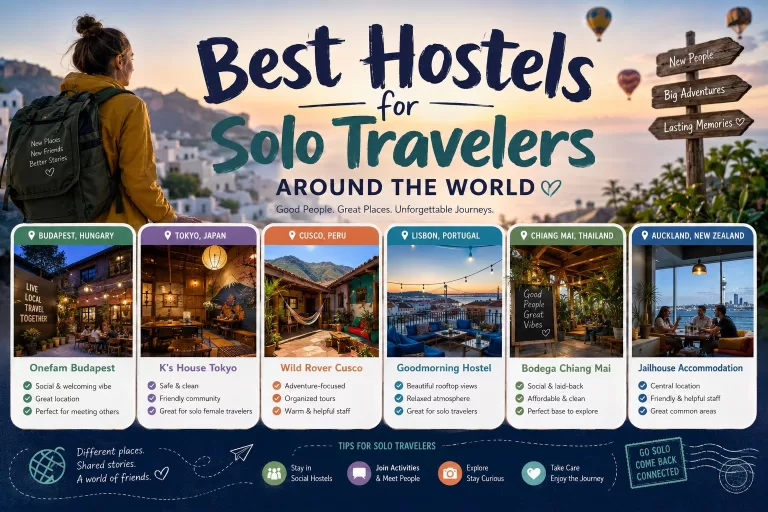
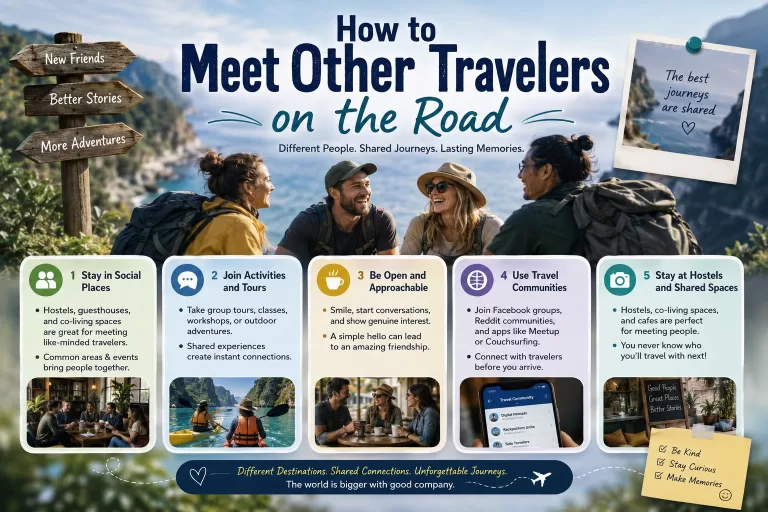
Hostels remain one of the more solo-friendly accommodation types specifically because they're built around meeting other travelers, which indirectly improves safety too — you're rarely completely alone if something goes wrong. A curated list of ones that consistently do this well is in best hostels for solo travelers around the world.
Staying Safe Day to Day
Most solo travel risk comes down to a handful of repeatable habits rather than dramatic situations. A few that make a consistent difference:
- Avoid displaying valuables openly — expensive cameras, jewelry, or phones held out in the open are one of the most common trigger points for opportunistic theft, especially in busy tourist areas.
- Keep a portion of money and a backup card separate from your main wallet, so a single lost or stolen item doesn't leave you with nothing.
- Trust your instinct over politeness. If a situation feels wrong — a person being unusually insistent, an offer that seems too convenient — it's fine to walk away without explanation.
- Learn a few basic phrases in the local language, particularly ones related to asking for help, directions, or prices. This reduces the situations where confusion is exploited by scammers.
- Stay aware of common scams specific to the destination — these vary a lot by region and are usually well documented online by other travelers.
Nighttime Safety Specifically
Risk profiles change noticeably after dark, and this is the area where solo travelers most often ask what's actually different. A few points worth planning around:
- Arrange transport in advance for late arrivals rather than figuring it out on the spot in an unfamiliar area.
- Stick to well-lit, populated streets even if it means a slightly longer route.
- Set a rough check-in time with someone if you're going out at night, especially in a new city.
- Know the local emergency number and how to reach your accommodation before you need either.
A more detailed breakdown of nighttime-specific precautions, including how this differs by destination type (large city, small town, resort area), is covered in how to stay safe as a solo traveler at night.
Useful Tools and Apps
A handful of apps genuinely improve solo travel safety rather than just offering peace of mind. Offline maps, a location-sharing app trusted contacts can check, and a translation app for emergencies are the core set worth having installed before departure. A full list, including what each one is actually good for, is in best apps for solo travelers to stay safe.
Money and Budget Considerations
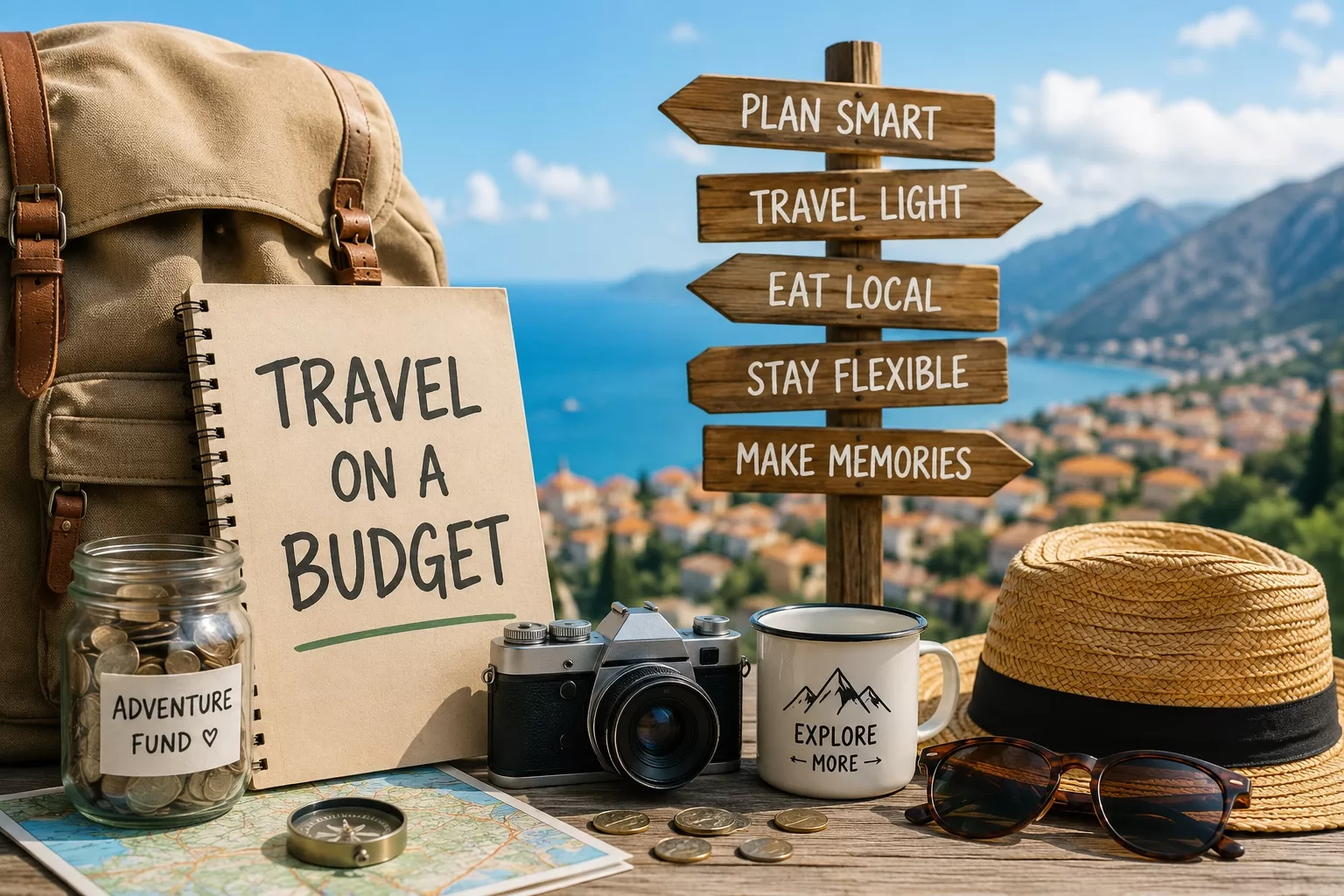
Solo travel often costs more per day than group travel, since accommodation and some transport costs aren't split. This doesn't mean solo travel has to be expensive — with the right approach to accommodation and planning, it's entirely possible to travel alone on a tight budget. Specific strategies for this are covered in solo travel on a budget: tips for traveling alone cheaply.
Solo Travel for Women
Some safety considerations are more relevant specifically to women traveling alone — certain destinations, certain accommodation types, and certain situational awareness habits differ based on this. A dedicated breakdown of destinations that consistently score well for this, along with specific precautions, is available in best destinations for solo female travelers.
Is Solo Travel Right for This Trip, or Would Group Travel Be Safer?
Solo travel isn't automatically the right choice for every destination or every traveler. Some destinations are genuinely easier and safer to navigate as part of a group, particularly ones with limited infrastructure, language barriers, or specific safety concerns for independent travelers. A direct comparison of when each approach makes more sense is in solo travel vs. group travel: which is right for you.
Common Solo Travel Safety Mistakes
| Mistake | Why It's a Problem |
|---|---|
| Not researching destination-specific scams | Leaves you vulnerable to the exact tactics locals and other travelers already know to avoid |
| Oversharing location on social media in real time | Makes it easy for anyone to know exactly where you are and when you're alone |
| Skipping travel insurance to cut costs | Removes the safety net that matters most when there's no travel companion to help manage an emergency |
| Ignoring gut instinct to avoid seeming rude | Prioritizes social comfort over personal safety in situations where it matters |
| Not having offline access to maps or documents | Creates unnecessary risk if phone service or WiFi is unavailable in an emergency |
Frequently Asked Questions
Is solo travel actually more dangerous than traveling with others?
Not inherently. Most solo travel risk comes down to preparation and situational awareness rather than being alone itself. Millions of people travel solo safely every year, and the destinations most popular for solo travel tend to have solid infrastructure for it.
What's the single most important safety habit for solo travelers?
Sharing your itinerary and rough plans with someone at home. It's simple, costs nothing, and means someone knows where to start looking if plans change unexpectedly and you go quiet.
Should first-time solo travelers start with an easier destination?
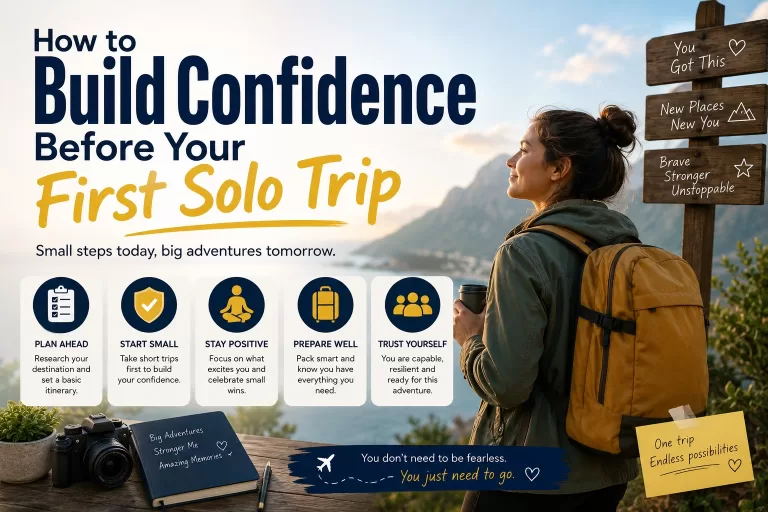
It helps. Destinations with reliable infrastructure, low language barriers, and established solo-traveler communities make it easier to build confidence before attempting a more remote or logistically complex trip alone.
The Practical Version of Solo Travel Safety
Solo travel safety comes down to a set of specific, learnable habits rather than instinct or luck — researching before arrival, choosing accommodation carefully, staying aware of surroundings, and keeping a support system in the loop. None of it eliminates risk entirely, since no form of travel does, but it consistently reduces it to a level that makes solo travel a realistic, manageable choice rather than a gamble.

Comments 0